
 Driving home this afternoon, I saw this cloud formation. It’s an ‘atmospheric wave’ which is formed by the atmosphere rising and falling like ripples in a pond. When the air rises above a threshold, its temperature drops below the point where visible moisture condenses. As it flows downward, it warms again and the moisture evaporates.
This type of formation can occur in the lee side of mountains or ahead of an approaching front under the ‘right’ conditions. This wave is one ahead of a front since there is rain in the forecast later this evening.
Pilots of smaller aircraft are wary of areas where these form since turbulence can be severe to extreme. I can tell you from personal experience as a pilot that it is not much fun trying to keep the wings level in even moderate turbulence.
UPDATE: The forecast was accurate – our chance of rain is now 100% at 7:50PM PDT.
 In keeping with the last nerdy post about mathematics, I would like to wish you a happy PI (3.14..) day! In my career in aerospace and also as a pilot and flight instructor, I use the quantity PI (approximately equal to 3.14159265) for all kinds of engineering and navigation applications.
 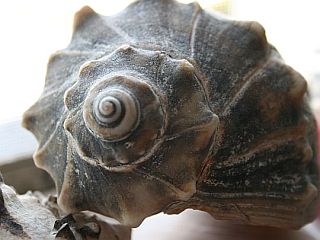 When Damsel snapped this picture of a seashell a couple of days ago, it reminded me of a class I took in school. One segment of this class studied the mathematics of pattern formations in nature. It was interesting to me then and has been interesting since.
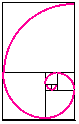 If you stack squares of dimensions in the Fibonacci sequence and connect the base intersections with a smooth curve, you get a spiral that resembles that of the shell. In the diagram at the left, two squares of dimension 1 are located in the center of the spiral, and squares of 2, 3, 5, 8 and 13 are added to the rectangle stack.
 The computer reduces or enlarges air compartments within the pillow to facilitate nasal airflow to minimize snoring.
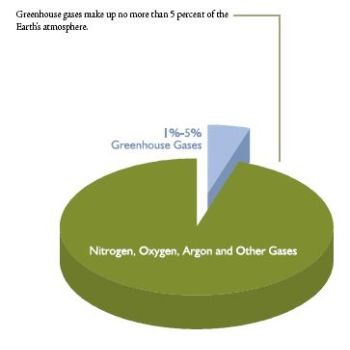 We’re adding a new item to our Global Warming Resources page. The
  Recent analysis shows that many