
A local entrepreneur, Don Shaw – a Torrance, California resident, was featured in several news outlets with his latest invention: a flying scooter – really – check it out.
The Ultralight Flying Scooter (TUFS) is the world’s first flying and driving motor scooter! The most amazing aspect of TUFS is its combination of a 2006 Honda Ruckus scooter with the most popular, top of the line and up-to-date ultralight paraglider flight equipment. It encompasses the long time dream of a flying and driving machine. This uniquely handcrafted flight kit is revolutionary to the powered paragliding world, pushing the simple joy of flying to the next extreme.
Because TUFS is considered an Ultralight Aircraft in the USA under FAR Part 103 (http://www.ulflyingmag.com/regs.html), a Federal Aviation Administration (FAA) (http://www.faa.gov) pilot’s license is not required to operate this single-seat aircraft. TUFS is also Department of Transportation (DOT) (http://www.dot.gov/) approved. This permits the scooter to be driven on highways and streets when the vehicle is configured to road/ground-mode.
The 42 m2 tandem-rated paraglider wing that gives TUFS its flight capability has a comfortable lift capacity of 508 pounds during flight. This weight includes the weight of the pilot, fuel and oil, extra carry-on payload, scooter, and TUFS flight kit. The maximum pilot weight should be under 210 pounds.
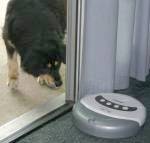 Well, today’s my birthday and I got a wonderful gift from my husband. It’s a Roomba robot floor cleaner! Roomba almost seems to have his own personality, and he is relentless in his quest for dirt! However, Bear, one of our dogs, was somewhat apprehensive of the new “rug rat.” As Roomba worked his way around the family room and by the door, the Cap’n and I had a few laughs watching Bear’s reactions.
 First, Bear tried to determine the nature of the gizmo by sniffing it – dogs do this in lieu of a handshake. She then watched it for a few moments and then carefully backtracked away from it so as to watch from a distance while she figured out if it was adversarial or not. Finally, she decided to ignore it completely, since it didn’t seem to be invading her backyard space.
 LONG NIGHTS MOON:
 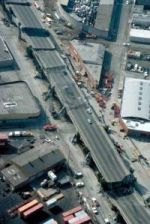 After sifting through seismic data from the two quakes, Valeri Korneev found a spike in the number of micro-earthquakes followed by a period of relative calm in the crust surrounding the quakes’ epicenters — months before the quakes occurred. Although more work needs to be conducted to determine whether other large quakes are foreshadowed by a similar rise and subsequent decline in small-magnitude tremors, Korneev’s analysis suggests that these peaks may be indicative of the total set of geological stresses that affect the timing and location of large earthquakes. Understanding this total stress picture may eventually make it be possible to predict destructive earthquakes within a much shorter time frame than currently possible.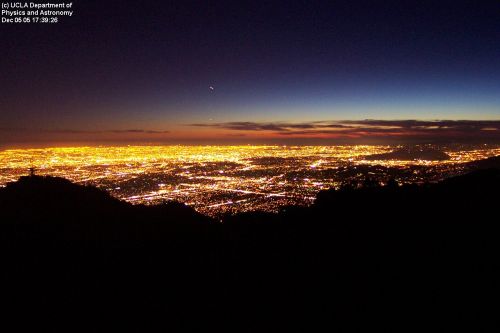
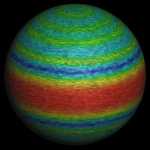 A new computer model indicates Jupiter’s massive winds are generated from deep within the giant planet’s interior, a UCLA scientist and international colleagues report in the journal Nature.
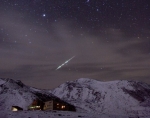 FIREBALL SIGHTINGS: In recent nights, sky watchers have seen some spectacular fireballs. Experts suspect it’s the Taurid meteor shower, a display caused by debris from Comet Encke.