
I’m sure there is a purpose in all this besides a science project . . .
Six years ago, MIT engineering Professor David Miller showed the movie Star Wars to his students on their first day of class. There’s a scene Miller is particularly fond of, the one where Luke Skywalker spars with a floating battle droid. Miller stood up and pointed: “I want you to build me some of those.”
So they did. With support from the Department of Defense and NASA, Miller’s undergraduates built five working droids. And now, one of them is onboard the International Space Station (ISS).
Inset image: MIT undergrads flight-test a prototype droid onboard NASA’s KC-135 reduced gravity aircraft.
Didn’t NASA Astronauts refer to the reduced gravity aircraft as the “vomit comet?”

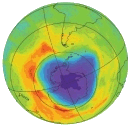 To better understand that question, we must discuss oxygen. Earth’s atmosphere is composed of 78% nitrogen, 21% oxygen and 1% “other gasses” which include water vapor, carbon dioxide and ozone. Included in the latter 1% is the dreaded “greenhouse gasses” you hear about. Less than one percent of the atmosphere is causing all that “trouble” — hmmmm. I digress — Back to oxygen . . .


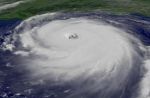 World Climate Report, an excellent resource for scientific climate analysis, published an article that demonstrates the falsehood of increased hurricane intensity to have any relationship to increases in sea surface temperatures (SST) or anthropogenic (man-made) climate change.