Not much to post – too many football/baseball/NASCAR events today. Enjoy this nice photo of our little castle in paradise. Click on the image to enlarge.

Not much to post – too many football/baseball/NASCAR events today. Enjoy this nice photo of our little castle in paradise. Click on the image to enlarge.
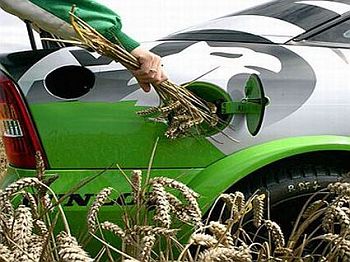 I read a scientific study today from CO2 Science that indicates biofuels may be harmful to the atmosphere. It is a well-documented reality that biofuels do not emit less CO2 than fossil fuels as they are purported to do.
Now, there is a scientific paper that suggests biofuels deplete ozone in the atmosphere. The ozone layer protects the surface of the Earth from intense solar UV radiation.
Image: a humorous look at how to put biofuels into your gas tank
The paper notes that nitrogen-based fertilizer used in the production of crops to be used in biofuels, cause nitrous oxide (N2O) to be emitted when burning them. N2O is yet another greenhouse gas that has been known for over 40 years to deplete stratospheric ozone.
The conclusion from the CO2 Science report follows:
In light of their findings, as [the authors] state in the concluding sentence of their report, “increased biofuels production and consumption could therefore be damaging to the ozone layer,” which would be detrimental to the biosphere due to the fact that the stratospheric ozone layer filters out much of the harmful UV-B radiation coming from the sun, which otherwise could do much damage to earth’s terrestrial plants.
I emphasized that last statement to point out the potential vicious cycle of destroying or adversely affecting the crops from which the fuels are made. This whole biofuel debacle is just another example of the liberal “superstition trumps science” untruth.

Late in the season, but this devil’s tongue barrel cactus is displaying some wonderful orange flowers. Click on the image to enlarge.

One of the greatest joys of having our new house in a semi-rural area is viewing the wildlife here. This beautiful Cardinal makes a great foreground to the desert foliage. Click on the image to enlarge.
 I apologize for posting this out-of-focus picture of a dead scorpion on the RV drive, but the lighting conditions weren’t too good to avoid a slight camera motion that blurred the image. At any rate, I just wanted to show how these little beasties show up if you put ultraviolet light (a.k.a. black light) on them.
Image – dead scorpion in ultraviolet light. Click on the image to enlarge.
A while back, we bought little hand held flash lights with UV LEDs just for the purpose of detecting scorpions. Our little Miniature Pinscher, Cabela, found this nasty little bug on the patio (thank goodness it was already dead) and I found a couple of them (also dead) in the garage the other night using the UV flashlight.