
“Droughts are becoming longer and more intense.”
That was Al Gore’s testimony before the United States Senate’s Environment and Public Works Committee on 21 March 2007. Gore offered no proof to his claim, so some researchers conducted a study on droughts of the 20th century; the conclusions of this study suggest that Gore was lying when he made his testimony.
The folks at CO2 Science, in their analysis, concluded with the following:
With respect to the temporal distribution of the 30 severe and persistent droughts identified by Narisma et al., seven of them occurred during the first two decades of the 20th century (1901-1920), seven occurred during the next two decades (1921-1940), eight during the middle two decades of the century (1941-1960), but only five during the next two decades (1961-1980), and a mere three during the final two decades of the century (1981-2000), which is not at all what one would have expected if the climate-alarmist thesis that is propounded by Gore and his followers was correct.
So just what is the situation here? The scientists who performed the analysis note that the 30 major droughts they identified were “mostly located in semi-arid and arid regions” that “are naturally prone [our italics] to large fluctuations.” And it’s as simple as that. The 30 major droughts of the 20th century were likely natural in all respects; and, hence, they are “indicative of what could also happen in the future,” as Narisma et al. state in their concluding paragraph. And happen they will. Consequently, the next time a serious drought takes hold of some part of the world and the likes of Al Gore blame it on the “carbon footprints” of you and your family, ask them why just the opposite of what their hypothesis suggests actually occurred over the course of the 20th century, i.e., why, when the earth warmed – and at a rate and to a degree that they claim was unprecedented over thousands of years – the rate-of-occurrence of severe regional droughts actually declined.
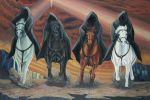 Last week, I found a website (thanks again, Rick) where four excellent essays offer the perfect rebuttal to the nonsense that Al Gore produced in his recent crockumentary, “An Inconvenient Truth.”
  . . . about Carbon Dioxide in the atmosphere, that is.
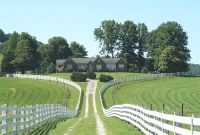 A 20-room mansion (not including 8 bathrooms) heated by natural gas. Add on a pool (and a pool house) and a separate guest house, all heated by gas. In ONE MONTH ALONE this mansion consumes more energy than the average American household in an ENTIRE YEAR. The average bill for electricity and natural gas runs over $2,400.00 per month. In natural gas alone, this property consumes more than 20 times the national average for an American Home. This house is not in the northern or Midwestern ‘snow belt .’ It’s in the South.
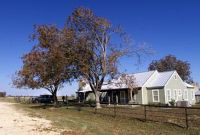 Designed by an architecture professor, this house incorporates every ‘green’ feature current home construction can provide. The house contains only 4,000 square feet (4 bedrooms) and is nestled on arid-high prairie in the American southwest. A central closet in the house holds geothermal heat pumps drawing ground water through pipes sunk 300 feet into the ground. The water (usually 67 degrees F.) heats the house in winter and cools it in summer. The system uses no fossil fuels – such as oil or natural gas – and it consumes 25% of the electricity required for a conventional heating/cooling system. Rainwater from the roof is collected and funneled into a 25,000 gallon underground cistern. Wastewater from showers, sinks and toilets goes into underground purifying tanks and then into the cistern. The collected water then irrigates the land surrounding the house. Flowers and shrubs native to the area blend the property into the surrounding rural landscape.
 After seeing pictures and interviews after Al Gore received his academy award, I couldn’t help but notice that the champion of the