Environment

Venus Transit Progress

transit-progress.jpg

This is a visual summary of the transit as seen from our Arizona home. Starting at the upper left is the first we were able to detect the silhouette of Venus as it just entered into the solar disc. Although we didn’t observe any disciplined schedule of taking images, we went outside every once in a while and snapped several images.

This is a collage of a dozen images from the first noticeable shadow until after the mid-transit image. Ecliptic north lies at about the 2:30 position in the individual images. Notice how atmospheric attenuation darkens the solar disc in the last three or four images taken as the sun approached the horizon.

Click on the image to enlarge.
Let Them Eat Bugs

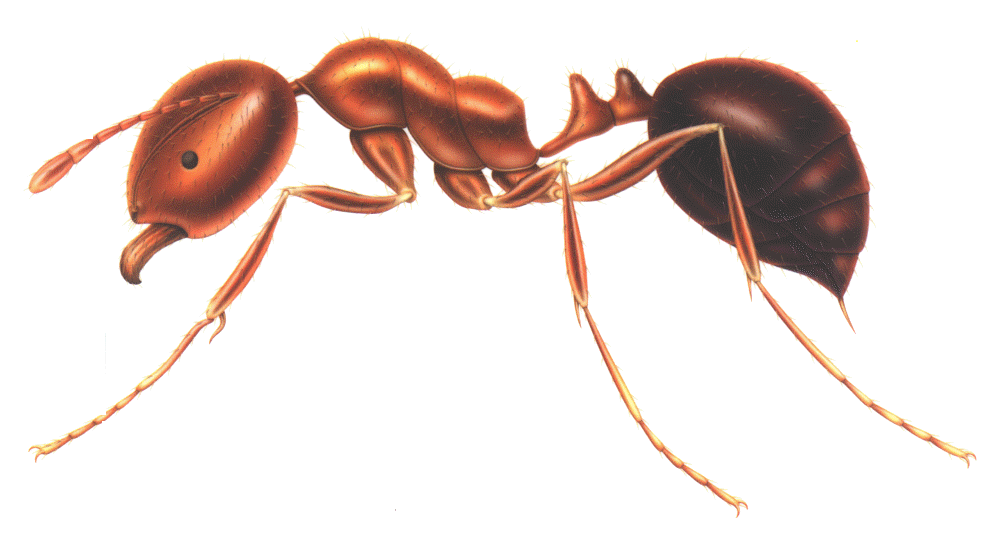
insect.gifThis is from the “You’ve gotta be kidding me” file. A group of so-called scientists in India wrote a paper addressing the topic of “increasing pressure on land is making meat production from macro-livestock less sustainable than ever before.” Their solution to the so-called problem is for people to stop raising cattle, hogs, etc. and to commence harvesting and eating insects.

Sherwood Idso of the CO2 Science website thinks that global-warming and climate change activists themselves should be leading the charge for entomological cuisine:

Globe-trotting Al Gore, for example, could dine on wasps, bamboo caterpillars, crickets and locusts, which Premalatha et al. tell us “are sold as delicacies in the finest restaurants and food shops in Thailand.” Or he may choose the very special rice-field grasshopper, which they say “is a luxury food item in Japan,” as are canned hornets. And James Hansen: when in Mexico, he could feast on escamoles (the pupae of an ant species) and gusanos (butterfly larvae), which are sold there for half the price he would have to pay in Canada, where they go for almost two U.S. dollars per gram (that’s over $900 per pound!).

Well said, Mr. Idso. Read the entire article at CO2science.org.

Total Solar Eclipse of August 21, 2017

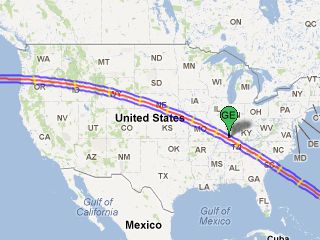
eclipse-2017.jpgWe started planning on viewing the total eclipse even before experiencing the annular eclipse last week. We think that we will observe the total eclipse from Casper, WY, although that could change.

The eclipse is still more than five years in the future and since it will occur on a coast to coast path across the United States, there are a lot of places to view the phenomenon. The greatest eclipse will occur in Western Kentucky – that is when the duration of totality is the longest – two minutes and 40 seconds of totality in this case.

Image: Path of totality across the states. Click to go to the official NASA eclipse site.

Wherever we decide to view the eclipse, I’m sure it will be spectacular. In Wyoming, totality will last about 2 minutes and 24 seconds. That’s plenty of time to see the stars and planets come out and for the surface temperature to drop noticeably.

This is a long time away, but we wanted to make this note about it on the blog. Maybe over the next five years we can organize an expedition of family and friends to enjoy the event. We’ll see . . .

Annular Animation

Using photographs that Damsel took during the eclipse, I threw together a little animation of the main part of the event. To start the animation, click the image below; it will run until maximum annularity. Click again to continue to almost the end of annularity. Click once more to to rewind. Pardon the slight jitter; it was difficult to align each frame perfectly.

I cannot tell you how amazingly spectacular it was to see in person. Damsel and I are already starting to plan for the total eclipse that will occur on August 21, 2017. We are looking at being near Casper, WY, but that could change between now and five years from now.

A Desert Bird Nest

mama-t.jpg

Springtime means more than just flowers, especially for the cholla in our front yard. It has had several flowers like the one I posted a couple of days ago. Today, I discovered that a pair of curve-billed thrashers built a nest in the cactus and there are three eggs in it (see inset in photo above). After the discovery, we went out to the courtyard to photograph one of the parents incubating the nest (since the mom & dad take turns). Click on the image to enlarge.

Pea Hen Sighting Just Down the Road

peafowl.jpg

I spotted this pea hen on a neighbor’s roof. Their house is about eight-hundred feet down the road from our house. We have seen peafowl in the downtown area, but never this far out into our semi-rural area.

I looked at peafowl on the internet and think that this is a female Indian peafowl. She was just standing on the roof in the shade of a couple of eucalyptus trees. Click on the image to enlarge.

A Cardinal in a Mesquite Tree

card-mesq.jpg

No, it’s not the first day of Christmas nor spring and neither is this a partridge in a pear tree. However, the red and green complimentary colors make this photo of a cardinal in the mesquite tree look very festive.

We put out the seed bell for the birds a couple of days ago and since they are attracted to it, we get lots of photo ops like this. Click on the image to enlarge.

To all of our Christian friends, Happy Easter and to all of our Jewish friends, Happy Passover.