A truth inconvenient to Al Gore perhaps. And a truth inconvenient to ozone-obsessed greenbats, as well. Gore, producer of the over-represented global warming hype documentary “An Inconvenient Truth,” doesn’t take the time to evaluate actual scientific observations, but rather jumps to the politically inept conclusions found by scientific consensus.
Notice that the conclusion made in the article quoted below by a Swedish scientist in 1948 is still the most likely reason for climate change — to wit: Solar fluctuations.
I found this on NRO’s The Corner:
Global warming, 1948 style [Iain Murray]
A scientist friend discovered an article from 1948 entitled “The Present Climatic Fluctuation.” Written by Professor Hans Ahlmann of the University of Stockholm, it begins:
“The present climatic fluctuation has been discussed since the 1920’s almost exclusively in scientific circles, although it has recently become a subject of more than academic interest…Ordinary people are beginning to realize that something has happened and is happening which is of great interest to themselves. The last dry summer, which transformed large parts of Western Europe into a virtual steppe, increased this interest and also caused anxiety, though this drought cannot be said with any certainty to belong to the present climatic fluctuation.”Sound familiar? All that is missing is a documentary by [then presidential losing candidate] Thomas E Dewey on the subject. Anyway, Ahlmann documents rapidly rising temperatures, glaciers melting like crazy, atmospheric circulation changes, species shifting, sea level rise, and so on from all around the world. But he concludes:
“If we find in the Antarctic similar evidence of the present climatic fluctuation as has been found in other parts of the world, we shall be justified in concluding that the present fluctuation is a world-wide phenomenon and probably the result of variations in solar activity which, slow as they may be to take effect, are actually resulting in an improvement in the climate of our world.”How times change!
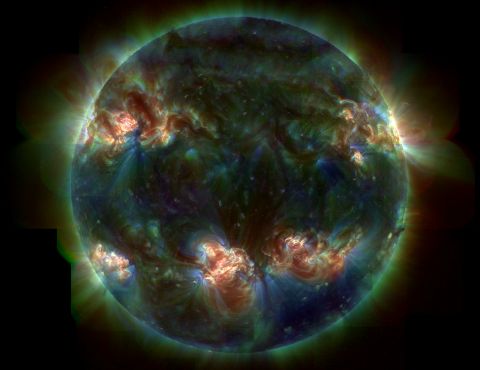
Stare into this yellow ball for a while and tell me that it has lesser effect than some paltry greenhouse gasses (which amount to less than 1 percent of the entire volume of the atmosphere):
Please read about solar activity and climate in these articles:
Solar X-Flares and Hurricanes
Global Warming – A Hot Topic
Ultimate Global Warming – SPF 2 Million Won’t Be Enough
Solar and Terrestrial Conveyor Belts
Sizzling Solar Snapshot
Scientific Consensus
 For a long time now. I have been threatening to create a sidebar item for the all-important issue of Climate and Global Warming. Ultimately, I want to transfer most of the resources I have used into a database of relevant articles sorted by article type. Well, that hasn’t happened yet, but I managed to get a few articles posted and a database window to all articles on this site that reference the “Global Warming” topic. The reference page may now be found on the sidebar under “information” as
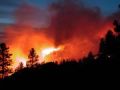 Some prominent scientists are becoming increasingly restive about the shrill portrayal of global warming science in popular media. The latest round concerned a paper by A. L. Westerling (Scripps Institute of Oceanography) relating an dramatic increase in western forest fires to regional warming and changes in the onset of snowmelt.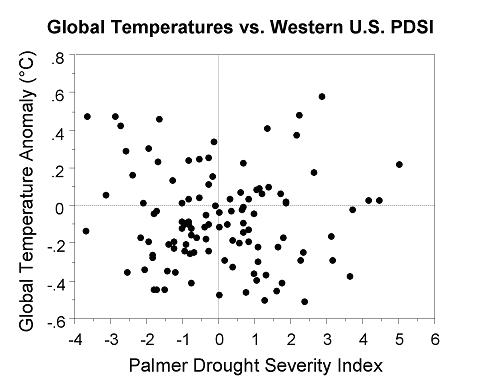
 Are you bored with hearing about global warming all the time? Me, too. The din of asinine predictions, warnings and claims that global warming is real, i.e. a rapid increase in the overall temperature of the Earth, always seems to occur just as summer arrives when — surprise — it gets warmer.