Astronomers Say Pluto Is Not a Planet – Forbes.com
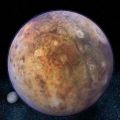 Leading astronomers declared Thursday that Pluto is no longer a planet under historic new guidelines that downsize the solar system from nine planets to eight.
Image: Pluto and moon Charon
After a tumultuous week of clashing over the essence of the cosmos, the International Astronomical Union stripped Pluto of the planetary status it has held since its discovery in 1930. The new definition of what is – and isn’t – a planet fills a centuries-old black hole for scientists who have labored since Copernicus without one.
[. . . ]
The decision by the prestigious international group spells out the basic tests that celestial objects will have to meet before they can be considered for admission to the elite cosmic club.
For now, membership will be restricted to the eight “classical” planets in the solar system: Mercury, Venus, Earth, Mars, Jupiter, Saturn, Uranus and Neptune.
Much-maligned Pluto doesn’t make the grade under the new rules for a planet: “a celestial body that is in orbit around the sun, has sufficient mass for its self-gravity to overcome rigid body forces so that it assumes a … nearly round shape, and has cleared the neighborhood around its orbit.”
Pluto is automatically disqualified because its oblong orbit overlaps with Neptune’s.
Instead, it will be reclassified in a new category of “dwarf planets,” similar to what long have been termed “minor planets.” The definition also lays out a third class of lesser objects that orbit the sun – “small solar system bodies,” a term that will apply to numerous asteroids, comets and other natural satellites.
It was unclear how Pluto’s demotion might affect the mission of NASA’s New Horizons spacecraft, which earlier this year began a 9 1/2-year journey to the oddball object to unearth more of its secrets.

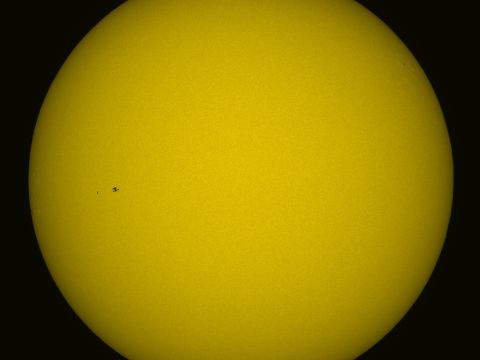
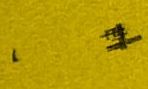 Though it’s 93 million miles away, the Sun still hurts your eyes when you look at it. But bright sunlight (along with accurate planning and proper equipment!) resulted in this sharp silhouette of spaceship and space station. The amazing telescopic view, recorded on September 17, captures shuttle orbiter Atlantis and the International Space Station in orbit over planet Earth. At a range of 550 kilometers from the observing site near Mamers, Normandy, France, Atlantis (left) has just undocked and moved about 200 meters away from the space station.
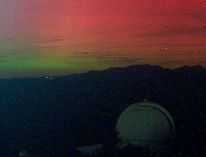 Lately, I’ve been studying solar phenomena because I think the topic is so critical to understanding the natural processes that affect global weather and climate. An interesting segué from the weather aspect, however, is into the subject of auroras – Aurora Borealis in the North and Aurora Australis in the South. What causes them?