Charities: Who Ya Gonna Call?

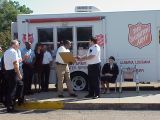
When disaster strikes, our support goes to the Salvation Army. Actually, we support them even when there’s not an emergency. Local citadels do a lot of good in our communities for adult rehabilitation and other community services.

After September 11, 2001, and in the wake of the terrible 2005 Hurricanes, the American Red Cross seems to have missed their charter, and entertain “perks” and other nonsense. We’re turned off from them for the time being.

This is a part of an article that Captain Ed posted today:

Red Cross Donations Go To Celebrity Parties

When people donate to the Red Cross, as I have in the past, they expect their money to go to disaster relief or to supporting blood drives, not to get their executives high-paying speaking gigs or to allow them to rub elbows with Hollywood celebrities. This amounts to an abuse and deception on the part of the Red Cross, gaining donations — especially in the wake of 9/11 and recently with Hurricane Katrina — by using the pain and suffering of victims in order to support a glamorous work environment. As Harvard lecturer Peter Dobkin Hall notes, the Red Cross doesn’t need to spend money to raise awareness of the organization, as people “throw money” at them whenever disaster strikes.


Six and a Half Billion People

. . . as of last night, that was the “official population” of our planet. And they say it will keep growing and growing.

From LiveScience.com:

Planet’s Population to Hit 6.5 Billion Saturday

A population milestone is about to be set on this jam-packed planet.

On Saturday, Feb. 25, at 7:16 p.m. Eastern Standard Time, the population here on this good Earth is projected to hit 6.5 billion people.

Along with this forecast, an analysis by the International Programs Center at the U.S. Census Bureau points to another factoid, Robert Bernstein of the Bureau’s Public Information Center advised LiveScience. Mark this on your calendar: Some six years from now, on Oct. 18, 2012 at 4:36 p.m. Eastern Daylight Time, the Earth will be home to 7 billion folks.

[ . . . ]

Remarkably, despite the many new developments over the past 50 years, one fact looks very much the same, explained Kent and Haub: Populations are growing most rapidly where such growth can be afforded the least—an observation that has changed little over time, they said.

That last thought is the most frightening. This means that the most backwards places on the planet will continue to produce, indoctrinate, and deliver more and more American hating people into the population.

Let the Good Times Roll

Or, “Laissez les Bon Temps Roulez” as they say in the French Quarter when Mardi Gras is in progress. When we hosted our wedding reception, the Cap’n and I used this lovely Harlequin doll and a number of other Mardi Gras props and used that theme for the party. It was wonderful. So, we wish you and revelers everywhere a happy Fat Tuesday!

I have more Mardi Gras props and decorations, so I promise to get some more pictures up soon.

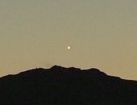
Planet Mercury in the Twilight

If you step out this evening or or tomorrow evening, you might catch a glimpse of the seldom-seen planet – Mercury. Known as the Incredible Shrinking Planet, Mercury is about to slip back out of sight as it disappears behind the Sun until it emerges later this year.

Right: Mercury over the Rockies as seen from Denver – Credit: Jeffrey Beall.

Meanwhile, a little known NASA mission – MESSENGER – got a boost from it’s thrusters to place it on trajectory for another gravity-assisted sling around planet Venus toward it’s ultimate goal of orbiting the closest planet to the sun.

New Scientist has some information about NASA’s MESSENGER mission:

Messenger probe nudged towards Venus flyby

NASA’s first mission to Mercury in more than 30 years completed its final trajectory correction manoeuvre on Wednesday before a flyby of Venus in October 2006.

Messenger – short for Mercury, Surface, Space Environment, Geochemistry and Ranging – is on a 7.9 billion kilometre path to becoming the first spacecraft to orbit Mercury.

Note: words in the New Scientist article are spelled correctly – at least in the UK where the magazine is based.

Damsel Sends You Catalina Island

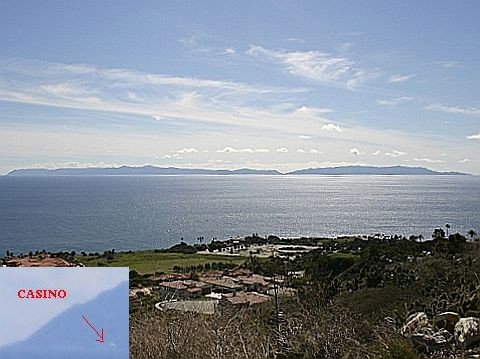
This is a nice wide shot of the entire island of Catalina. The island is about 22 miles from end to end, and that entire span is visible in this view. This shot was made from a vantage point on the Palos Verdes Peninsula at elevation 800 feet above sea level. It was so clear that day, we could see Santa Barbara Island at a distance of 40 or so miles to the west. The view of Catalina was so clear that we could discern the famous Casino at the far east (left) end of the island with the naked eye from the mainland. You can see it as a white speck in the inset from another photo taken without a telephoto lens.