Barrel Cactus Flowers

I spotted these flowers on a barrel cactus up the slope on the neighbor’s property. I had the wrong shoes on to go up the slope to get a photo, so Bob climbed up and took this photo. I’m not sure of the exact species of this ferocactus, although it might be F. wislizeni. For sure, it sure has pretty flowers. Click on the image to enlarge.

Update: Crotalus told us the variety of this cactus in comments . . .

This is Ferocactus cylindraceus, the California or Compass Barrel.

Thanks, Crotalus!

fish-hook.jpg

First Saguaro Flower Opened Today

Well, last night, actually. When I went out front this morning, I saw that my first saguaro flower had opened overnight. The flower is up at about the eleven foot mark on the cactus, so I will be unable to get an image of it face on. Not to worry, though, there are plenty of buds on the lower arms that will continue opening this spring and summer. Click on the image to enlarge.

saguaro-flower.jpg

Moon over the Saguaro

It’s another beautiful day in our little half-acre of paradise. After a sumptuous meal of Oriental broccoli and beef on a bed of rice, the family (us and the dogs) took a walk down our unpaved road. On the way out of the courtyard, I paused to get this shot of the moon rising over our saguaro. Click on the image to enlarge.

saguaro-moon.jpg

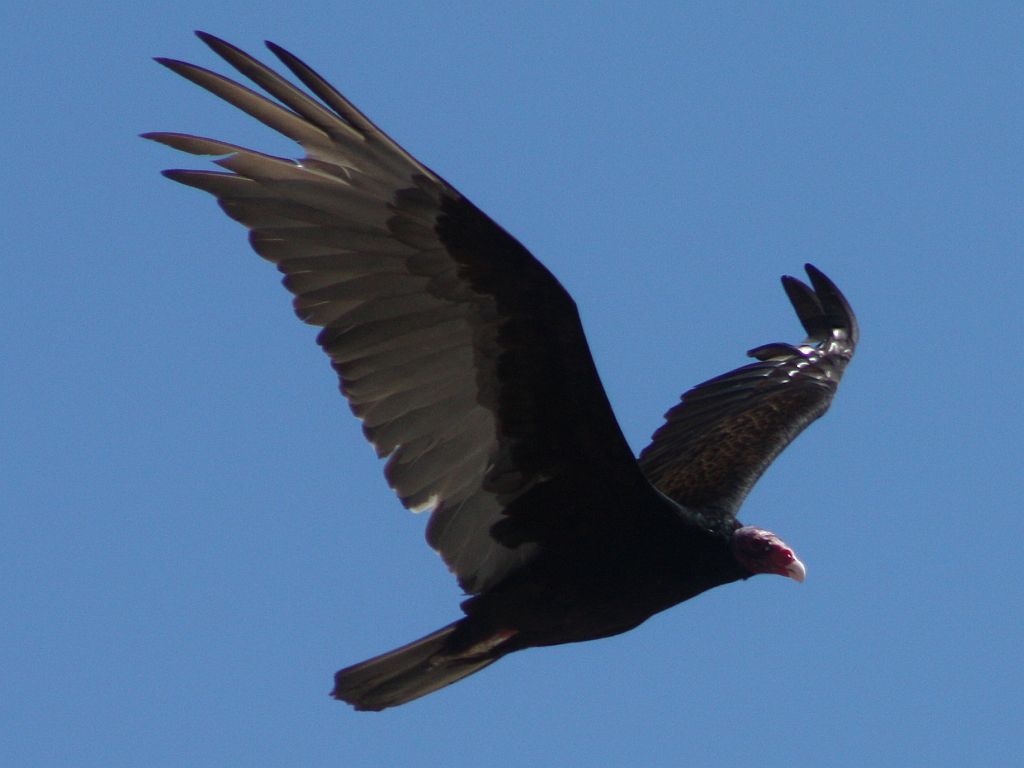
Turkey Buzzard

buzzard.jpg

We frequently see these turkey buzzards (Cathartes aura) soaring over our neighborhood in search of food. I took this photo of a low flying buzzard from our patio this morning. Click image to enlarge.

The proper common name for these scavenging birds is turkey vulture, even though buzzard is commonly used. It is called “turkey” because of its slight resemblance to the red-headed game bird.

I cannot remember seeing turkey buzzards over our California home although their summer range supposedly includes SoCal.

From Wikipedia:

The Turkey Vulture is a scavenger and feeds almost exclusively on carrion. It finds its meals using its keen vision and sense of smell, flying low enough to detect the gasses produced by the beginnings of the process of decay in dead animals. In flight, it uses thermals to move through the air, flapping its wings infrequently. It roosts in large community groups. Lacking a syrinx—the vocal organ of birds—its only vocalizations are grunts or low hisses. It nests in caves, hollow trees, or thickets. Each year it generally raises two chicks, which it feeds by regurgitation. It has very few natural predators. In the United States of America, the vulture receives legal protection under the Migratory Bird Treaty Act of 1918.

Around Town

We ran a couple of errands this morning. After that, we took a drive through some parts of town that we had yet to explore. One yard had this rustic scene with an antique kerosene lantern hanging on a gate, a fencepost with barbed-wire and a saguaro getting ready to bloom. Our town is a charming little place. Click on the image to enlarge.

around-town.jpg