Monsoon Evening

Monsoon Evening

We had a pretty good rain shower this afternoon. It quickly came and went without much impact other than raising the humidity in our part of the Sonoran desert to an astounding 65%. Who ever said that Sonoran summers were a DRY heat?

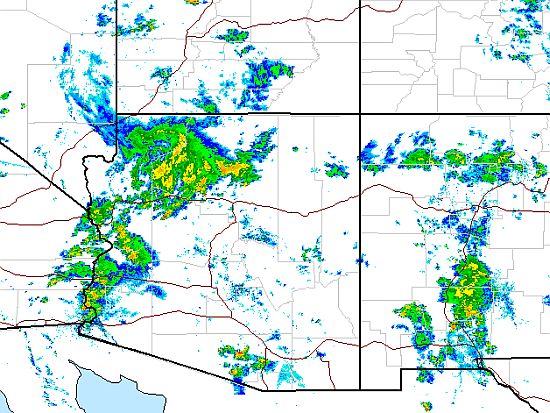
All jesting aside, the rain this summer has brought a badly needed increase to the ground water plane here, regardless of the minor discomfort of a little mugginess. Tonight’s radar weather map indicates a lot of shower activity along the lower Colorado river and north of I-40 in the Kaibab plateau. The Sandia mountains and a lot of new Mexico are also enjoying a rainy evening.

There are a few flash flood warnings in all the heavy rain shower areas.

The Century Plant Bloom

About a quarter mile east of here, a neighbor has this beautiful variant of an agave planted in the yard. The flower seems to be about fifteen feet in the air. It makes a nice foreground to some Arizona monsoon clouds in the background.

century-bloom.jpg

Lawyer’s Tongue Cactus

lawyer-tongue.jpg

Lawyer’s Tongue prickly pear cactus is also known as “Cow’s Tongue,” “Donkey Ear” and opuntia engelmannii var. linguiformis. We collected a specimen that was laying on the ground under a larger plant in the wash running through one of the local parks. We placed it in a pot of native soil from our wash last summer. I think it likes it here because it quickly grew two new pads the first year. Now, it is almost time to re-pot it or maybe put it in the ground.

We found WufStuff, a very interesting website that describes this cactus and has a lot of good information about prickly pear cacti in general. Excerpt:

A common sight in Arizona gardens is the Cow’s Tongue Prickly Pear. Folks like this cactus because of the unusual shape of the pads, which strongly resemble a cow’s tongue. It takes little water, and has yellow or orange flowers in the spring that form along the margins of the pads, followed by numerous red fruits.

The cultivating of these cactus requires only that it be planted and left to grow on it’s own, no fertilizer, no watering, nada, nothing. Best grown on land useless for growing corn and other Cattle feed stock. After a year or two, the pads are ready to eat and the fruit is ready to harvest if so desired. After each feeding the cactus is left to grow another meal which happens quite quickly in the desert lands of the Southwest.

Click on the image above to enlarge.

A Desert Toad

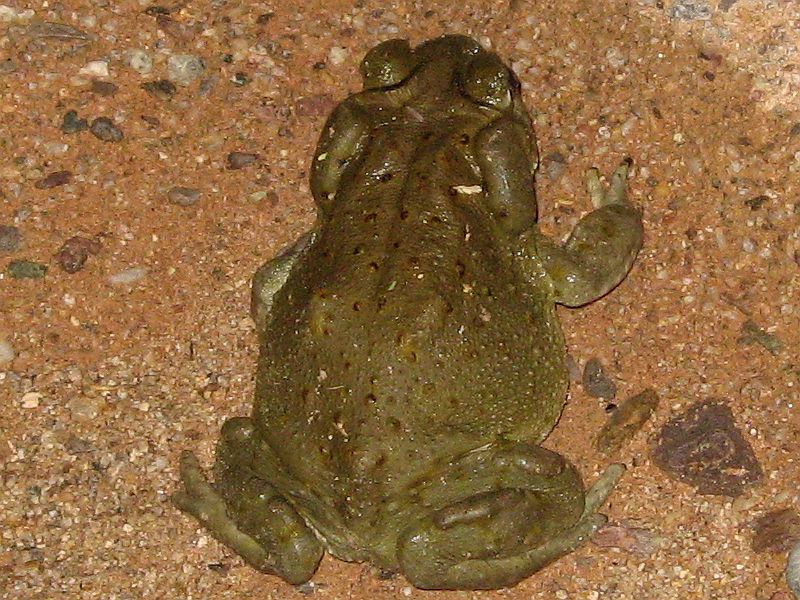
Colorado River ToadI noticed something moving on the RV drive last evening after some thundershowers. I thought it looked like a frog. We took photos of it while it was climbing up the slope behind the drive.

After a little research this afternoon, we believe it is a Colorado River Toad, a.k.a. Sonoran Desert Toad. It matches the description given in Wikipedia for such toads.

We have long heard that desert toads respond to thunder and come out of their burrows to look for pools in which to spawn. This is our first encounter with a desert toad.

Click on the image to enlarge.

From Wikipedia

The Colorado River toad, Bufo alvarius, also known as the Sonoran Desert toad, is a psychoactive toad found in northern Mexico and the southwestern United States. Its skin and venom contain 5-MeO-DMT and bufotenin.

The Colorado River toad can grow to about 7.5 inches (190 mm) long and is the largest toad in the United States apart from the non-native cane toad (Bufo marinus). It has a smooth, leathery skin and is olive green or mottled brown in color. Just behind the large golden eye with horizontal pupil is a bulging kidney-shaped parotoid gland. Below this is a large circular pale green area which is the tympanum or ear drum. By the corner of the mouth there is a white wart and there are white glands on the legs. All these glands produce toxic secretions. Dogs that have attacked toads have been paralyzed or even killed. Raccoons have learned to pull a toad away from a pond by the back leg, turn it on its back and start feeding on its belly, a strategy that keeps the raccoon well away from the poison glands.

An Actual Weatherman Debunks NOAA Claims

TV Weatherman Joe Bastardi, best known for his AccuWeather reports, has penned an article at The Patriot Post dealing with “Data Deception.” Joe starts out with a few links to debunk NOAA’s assertion that July, 2012 was the hottest July on record, which of course is more of NOAA and NASA’s chronic misinformation. Joe then continues with these thoughts on current conditions and how the gullible media stokes the non-existent fire with their brand of Chicken Little hysteria:

best-name-evah.jpgIt is true that it is very warm off the Northeast Coast, which is part of the reason I am so concerned that like the 1950s, the northeast is vulnerable to hurricane landfalls. However, it’s very cold off the West Coast. That should be relevant also when talking about how warm the waters are off our coasts. (It’s part of the cold cycle of the Pacific we have entered.)

One can read the debunking [at this link], but I wish to make a few other points. There seems to be a common thread with people who believe their idea of absolute truth means they can say and do whatever they want to get to that truth. The result is a series of loud announcements that grab the attention of a gullible media, and when debunked, do not have near the coverage as the original pronouncement.

[more]

Emphasis mine.