Slowly, this amazing instrument is becoming out-of-date, and things seem to be wearing out on it. Yet, because of backup systems, on-site repairs and remote engineering excellence, it keeps on ticking. Hopefully, it will remain functional until the James Webb Space Telescope becomes operational.
From NASA:
Hubble’s Advanced Camera for Surveys Resumes Exploring the Universe
After a brief hiatus, the Advanced Camera for Surveys aboard NASA’s Hubble Space Telescope is back in business, probing the far reaches of space in a quest to understand the true nature of the universe’s most dominant constituent: dark energy.
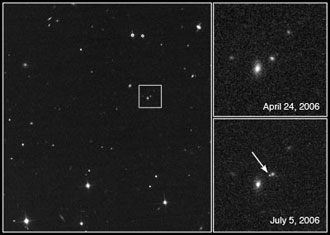
This is one of the first images of the universe taken after the ACS camera resumed science operation on July 4. The camera was offline for nearly two weeks as NASA engineers switched to a backup power supply after the camera’s primary power supply failed.
Image above: A cluster of galaxies with recent supernova. Image Credit: NASA.
 Considering the results in total, the Dutch and Spanish researchers conclude that, over the last two decades of the 20th century, “Europe as a whole has a tendency to greening,” and much of it is “seeing an increase in its wood land proportion.”
  In spite of predictions of Global Warming alarmists that hurricanes in 2006 would again devastate the Nation, largely due to the Administration’s non-participation in the Kyoto accords, the weather patterns aren’t supporting their theories.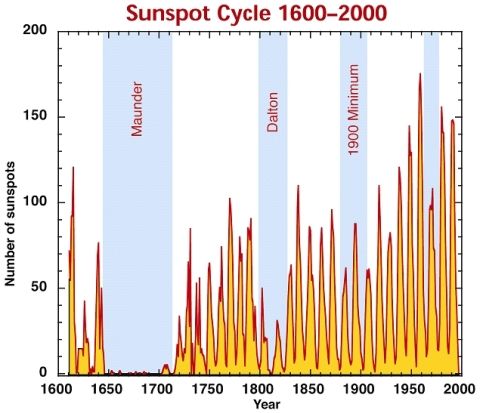
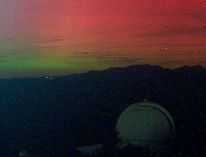 Lately, I’ve been studying solar phenomena because I think the topic is so critical to understanding the natural processes that affect global weather and climate. An interesting segué from the weather aspect, however, is into the subject of auroras – Aurora Borealis in the North and Aurora Australis in the South. What causes them?
 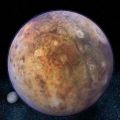 Leading astronomers declared Thursday that Pluto is no longer a planet under historic new guidelines that downsize the solar system from nine planets to eight.