
Finally! The Mars Rover “Opportunity” returned an image of the Martian Landscape that doesn’t look like it was taken in the Mojave Desert. The eerie textures and coloring lend an other-worldliness appearance to this image, unlike the images that comedian Dennis Miller asserts “Looks like Barstow!”
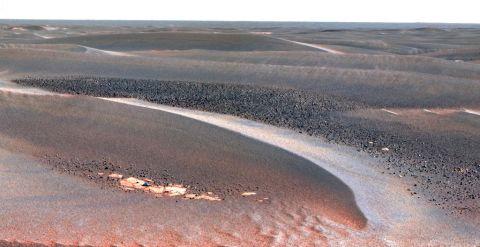
Photo Courtesy NASA/JPL-Caltech
Click here for a Larger Image.
As NASA’s Mars Exploration Rover Opportunity continues to traverse from “Erebus Crater” toward “Victoria Crater,” the rover navigates along exposures of bedrock between large, wind-blown ripples. Along the way, scientists have been studying fields of cobbles that sometimes appear on trough floors between ripples.
They have also been studying the banding patterns seen in large ripples.This view, obtained by Opportunity’s panoramic camera on the rover’s 802nd Martian day (sol) of exploration (April 27, 2006), is a mosaic spanning about 30 degrees. It shows a field of cobbles nestled among wind-driven ripples that are about 20 centimeters (8 inches) high.
This is a false-color rendering that combines separate images taken through the panoramic camera’s 753-nanometer, 535-nanometer and 432-nanometer filters. The false color is used to enhance differences between types of materials in the rocks and soil.
OK — I admit that this is a “false color” image and isn’t representative of the natural sunlight on Mars, but if you were to pump sunlight up to the amount the Earth gets, you just might get a picture like this.
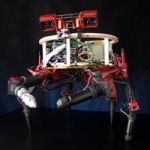 Lemurs, those wide-eyed, active, monkey-like animals running around the island in the movie “Madagascar,” are known for their ability to leap. A robotic lemur being tested at NASA’s Jet Propulsion Laboratory moves more slowly, but might someday take its own giant leap – by going into space with astronauts.
  Former NASA astronaut Bob Crippen, pilot on the first space shuttle mission in 1981, has been honored with the nation’s highest award for spaceflight achievement, the Congressional Space Medal of Honor.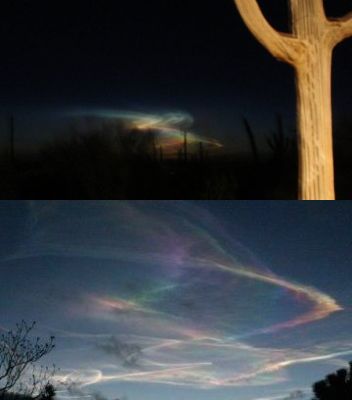
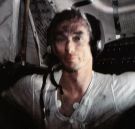 April 4, 2006: Thirty-plus years ago on the moon, Apollo astronauts made an important discovery: Moondust can be a major nuisance. The fine powdery grit was everywhere and had a curious way of getting into things. Moondust plugged bolt holes, fouled tools, coated astronauts’ visors and abraded their gloves. Very often while working on the surface, they had to stop what they were doing to clean their cameras and equipment using large–and mostly ineffective–brushes.
 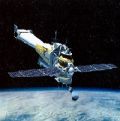 A Russian communications satellite appears to have been struck by “a sudden external impact”. Its operators say the extent of the damage caused means the satellite will be sent into “space disposal orbit”.
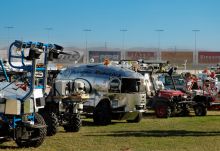 Join NOVA for an exclusive backstage pass to the DARPA Grand Challenge—a raucous race for robotic, driverless vehicles sponsored by the Pentagon, which awards a $2 million purse to the winning team. Armed with artificial intelligence, laser-guided vision, GPS navigation, and 3-D mapping systems, the contenders are some of the world’s most advanced robots. Yet even their formidable technology and mechanical prowess may not be enough to overcome the grueling 130-mile course through Nevada’s desert terrain. From concept to construction to the final competition, “The Great Robot Race” delivers the absorbing inside story of clever engineers and their unyielding drive to create a champion, capturing the only aerial footage that exists of the Grand Challenge.