The Last Saguaro Flower of Summer

Saguaro Flower

This flower opened on our big saguaro cactus out front this morning. Most of the flowers had come and gone in June, but last week we noticed a new flower bud. When I say last of the summer, I mean for this cactus, as there are others in town that will likely have more flowers to come. Maybe even this one will have more, but I doubt it.

Since the cactus is very tall, in order to see inside the flower, I had to take this shot from across the driveway with the telephoto lens. Canon SL1 settings: F8.0, ISO 100, Shutter 1/500 sec., Focal Length 300mm.

Monsoon Skies over Arizona

Monsoon Skies

I took this photo from the courtyard looking east toward the Hieroglyph and Wickenburg mountains. There were still a lot of thunderclouds built up in the distance which I thought would be nice to frame behind our ocotillo and saguaro out front. Click on the image to enlarge.

The weather looks to still be likely thunderstorms in the area tonight and perhaps tomorrow, but the rest of the week looks like it should be sunny and warm (100°). I, personally, am hoping for lower humidity since the monsoons have the desert feeling more like a sauna bath or an old Navajo sweat lodge.

Butterfly and Red Bird of Paradise

Butterfly and Red Bird

I was sitting in the great room when I noticed a black spotted butterfly browsing on one of the red bird of paradise shrubs in the courtyard. I grabbed my camera and went out front hoping to get a shot of the butterfly and flower.

When I got outside, the butterfly flew away at first. After a few seconds, it circled back to the same shrub it had been browsing and resumed. I took several shots of it while it did its thing, this one being among the best photos I got. Click on the image to enlarge.

The Wind Farm Money Pit

Wind Farm

According to a new study by University of Utah and Strata Policy (a think tank) researchers, the cost of wind power relative to what the government is telling you is up to 48% more than estimates. Moreover the subsidies for wind power generation that come out of our taxpayer pockets amounts to over $5 Billion:

In the US this amounts to an annual $5 billion per year in Production Tax Credits (PTC). Here is money that could have been spent on education, healthcare, defense or, indeed, which could have been left in the pockets of taxpayers to spend as they prefer.

Instead it has been squandered on bribing rent-seeking crony-capitalists to carpet the landscape with bat-chomping, bird-slicing eco-crucifixes to produce energy so intermittent that it is often unavailable when needed most (on very hot or very cold days when demand for air-conditioning or heating is high) and only too available on other occasions when a glut means that wind producers actually have to pay utilities to accept their unwanted energy. This phenomenon, known as “negative pricing”, is worthwhile to wind producers because they only get their subsidy credits when they are producing power (whether it is needed or not). But clearly not worthwhile to the people who end up footing the bill: ie taxpayers.

The wind generation business is less reliable, more expensive and must be backed up by conventional generation methods continually on standby. There are myriad other quirks in the industry such as killing things that fly, making scenic landscapes an eyesore and causing anxieties to nearby residents.

Meanwhile, elsewhere in the world, Austrailia canceled all subsidies to wind-produced energy in that nation. The whackos in state and federal positions that dictate energy policy stateside have yet to realize how expensive and pointless wind energy production has become.

Astrophytum Ornatum Cactus Flowers

Cactus Flowers

We bought this “star” or “monk’s hood” cactus at a succulent show in California about eight years ago. It cost four dollars and was in a three-inch pot at that time. It has been transplanted to larger pots and is now in an eight inch pot sitting behind the patio adjacent to the RV drive.

Two flowers opened this morning and are the first ones to open since we have had the cactus. The flowers are about four inches in diameter. There are three more flower buds on the cactus that should also open.

Astrophytum Ornatum is native to Mexico, but seems to like it here in the Arizona desert. Click on the image to enlarge.

Summer Sunset

Summer Sunset

Our monsoon season isn’t just about thunderstorms and rain, although those are welcome and mostly pleasant, but also about how the setting sun illuminates the clouds of summer. We were taking the dogs for their dusk walk and we saw this beautiful array of textures and colors in the evening sunset.

I did not have my camera with me, but Bob had his pocket Canon Power Shot 140IS and managed to capture this image. Click on the image to enlarge.

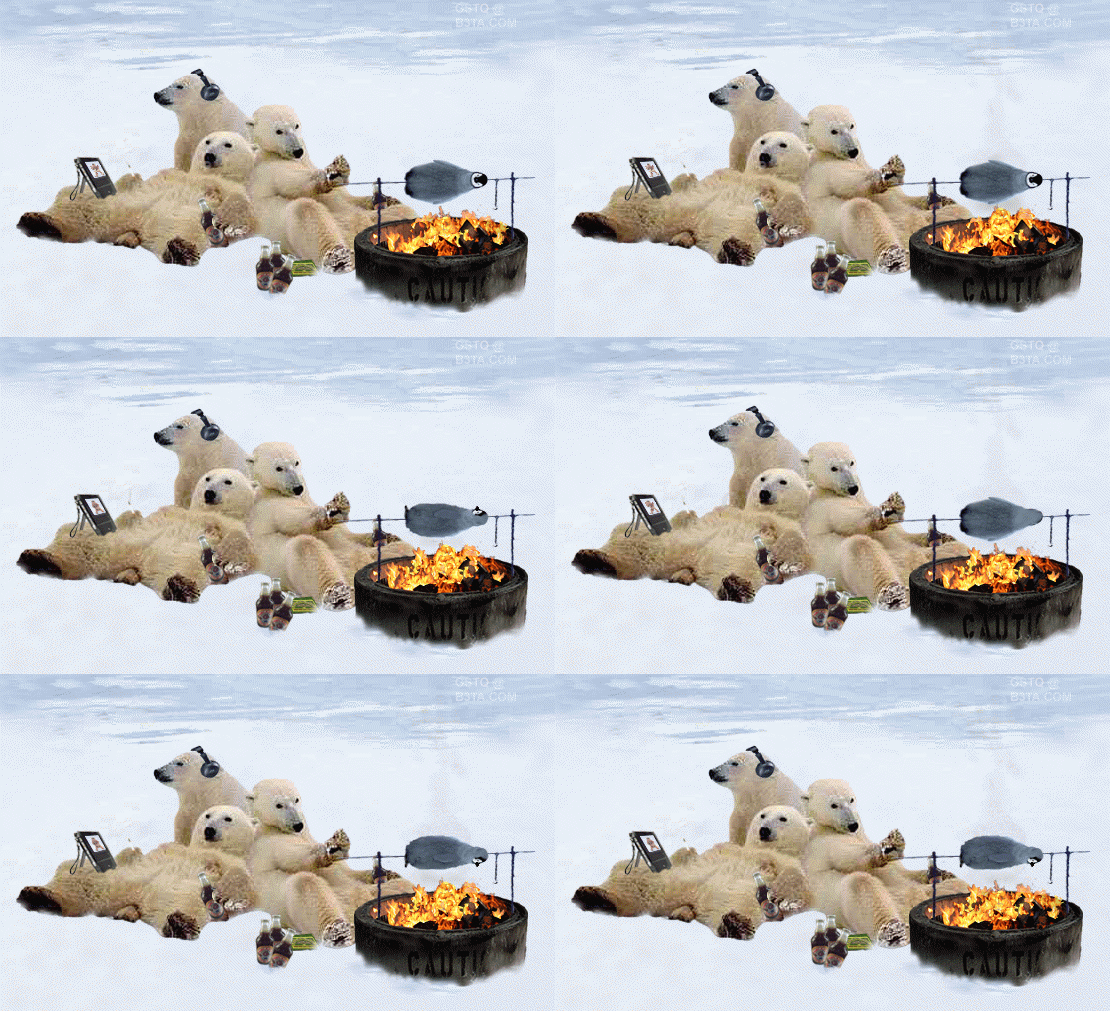
Polar Bears Still Thriving Despite Greenbat Liars

bear party

Lies told by Al Gore, John Kerry, Barack Obama and others are not holding up to reality. The timetable for polar bear doomsday and other disasters just isn’t cooperating with the original schedule of events forecast by the Greenbat liars.

Jordan Candler, writing for The Patriot Post disclosed the polar bears continue to thrive:

In 2009, then-Sen. John Kerry said, “Scientists project that the Arctic will be ice-free in the summer of 2013.” In that same year, Al Gore reiterated the claim: “Some of the models suggest that there is a 75 percent chance that the entire north polar ice cap during some of the summer months will be completely ice-free within the next five to seven years.” Without ice, polar bears have a tough time surviving, and sadly we had to bid farewell to this wonderful creature a few short years ago because we failed to heed the warning. Actually, no, that’s not at all true. Not only has the Arctic retained a considerable amount of ice in recent summers, but polar bears are thriving. Earlier this year, Dr. Susan Crockford of the Global Warming Policy Foundation discovered, “On almost every measure, things are looking good for polar bears. Scientists are finding that they are well distributed throughout their range and adapting well to changes in sea ice. Health indicators are good and they are benefiting from abundant prey.” With roughly 25,000 polar bears estimated to be roaming the Arctic, up from 5,000 in the ‘60s, the alarm should be over. But it’s not.

bearfacepalm.pngAccording to a new report from the U.S. Geological Survey, computer models suggest nearly one-third of polar bears could be wiped off the planet in 10 years as greenhouse gas emissions rise. Let’s get this straight: The same scientific lobby that warned decades ago polar bears would be extinct by now — but which instead grew in population — are now telling us that a significant percentage of bears could face eradication within a decade based on computer models. The same computer models that utterly failed to forecast the current 18-year-old global warming hiatus. That kind of logic is enough to make even a polar bear do a facepalm.