 I had a chat with a colleague at work this morning about the recent snowfall in Malibu, California. He chuckled, “It’s the Gore effect,” and told me about an article he saw on Instapundit, “Wherever Al Gore goes, unusually low temperatures seem to follow.”
I read Instapundit’s article and found that the term “Gore effect” has actually made it into the Urban Dictionary.
My colleague and I had a good chuckle over that.
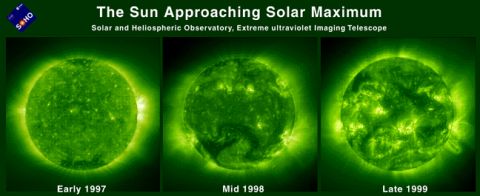
Having heat or cold spells is hardly unusual — it’s just the way things go. Long term temperature and climate effects are in the domain of the Sun’s behavior and there is little we can do about that. Short term phenomena will average out to the global mean annual temperature — which seems to be cooling off a bit according to this report about the Nordic sea ice expansion from World Climate Report:
 This may be a once in a lifetime celestial event for Earthlings to witness. A sun-grazing comet, McNaught, is visible to the naked eye in broad daylight! If you have clear skies, you should step outside today and try to observe the comet.
 January 5, 2007: For many years, space archeology has been a favorite topic of Science@NASA readers: NASA scientists use Earth-orbiting satellites to find ancient ruins invisible from ground level. Prime real estate for this kind of discovery is Central America. In that part of the world, satellites are not only revealing long-held secrets of the Maya, but also improving the everyday lives of modern Central Americans by helping them monitor and manage their environment.
 According to some GPS data compiled by geological scientists, New Orleans is sliding into the Gulf of Mexico. It seems that the city is situated on a big, moving mass of bedrock that is detached from the North American Continent. Over the next few thousand years, this rock will slowly move south toward the Gulf, but it is simultaneously sinking at more than twice the rate at which it is moving.
 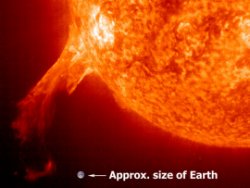 NASA Scientists studying the relationship between the Sun’s magnetic activity and the peak number of sunspots, have discovered a six-year relationship between the two phenomena. If the trend continues as it has since 1868, we should experience a count of about 160 sunspots during the next solar cycle peak, due in 2011.
 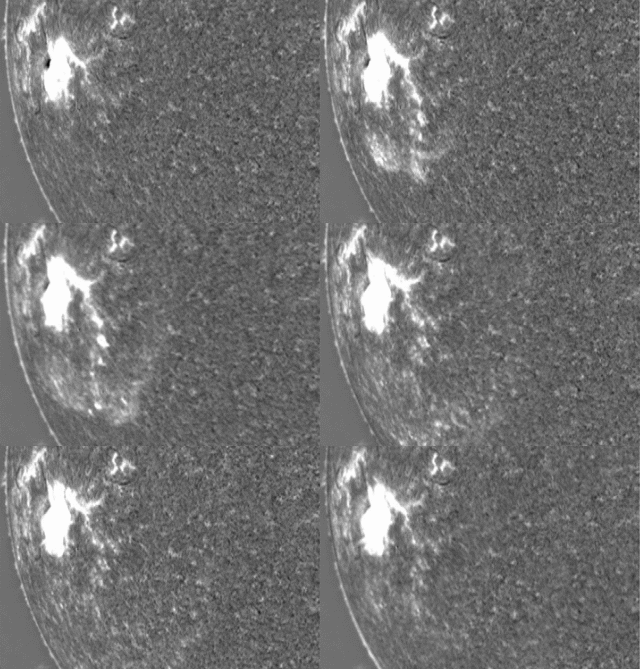 This may be more evidence that the Sun is entering one of it’s most active