Flowers

Vernal Equinox

Vernal Equinox

I got this screen capture this morning over at Archaeoastronomy.com which has probably the best depiction of the orbital stations of the Earth relating to seasonal changes. The animated graphic nicely illustrates the concept of the Earth passing through the eight stations as it orbits the sun.

Coincidentally with the advent of spring, one of the hedgehog cacti I wrote about yesterday has two flowers open this morning. Damsel took this image of one of them. Click on the image to enlarge.

Hedgehog Cactus Flower

The First Cactus Flower of Spring

Beavertail Cactus Flower

In what is getting to be an annual tradition, here is the post recognizing the first spring cactus flower in our xeriscape garden. Of course, this is a Beavertail Cactus Flower (opuntia basilaris) growing just behind the wall out front by the road. The pink flower bud we saw this morning opened into this nice flower this afternoon and it already has attracted bees and other pollinators.

This is the last year for this cactus since it is one of those that developed a fungus or something that gives the paddles a circular depressed area that is discolored. We have other beavertail cacti, including one we imported from California, that are planted in the rock and cactus garden, so there will undoubtedly be more of these brilliant pink flowers next spring as well. Click on the image to enlarge.

Wildflowers in Bloom

Arizona Poppy Desert Marigold Orange Mallow

Thanks to an El Niño shortened winter, spring wildflowers are already popping up everywhere in the desert. Last week, during our visit to the West Valley (Bob had a doctor appointment), we noticed a lot of wildflowers along the roadside and in the median on US 60 between Wickenburg and the outer loop (Loop 303) of the Phoenix Metro Area, which is where the desert ends and the urbs begin.

We took the dogs for a walk today after dinner and I remembered to bring my camera since we see wildflowers along our walk. All three of these photos above were taken within a quarter mile of our house and are completely uncultivated desert wildflowers.

From left to right above, we have an Arizona Poppy, a Desert Marigold and an Orange Mallow. I used my usual Canon Rebel T3 to capture all three images. Click on any of the images to enlarge.

Gerbera Daisies and Tulips

Gerbera Daisies and Tulips

The flower shop in the supermarket had cut Gerbera Daisies and some nice tulips today. I bought a bunch of each and fashioned this centerpiece for the dining table this afternoon. Click on the image to enlarge.

The flowers made our light lunch of healthy greens, tomatoes, cubed avocado and shredded chicken breast taste all the better. We enjoyed a lovely spring-like day here in the desert once more.

Signs of Spring

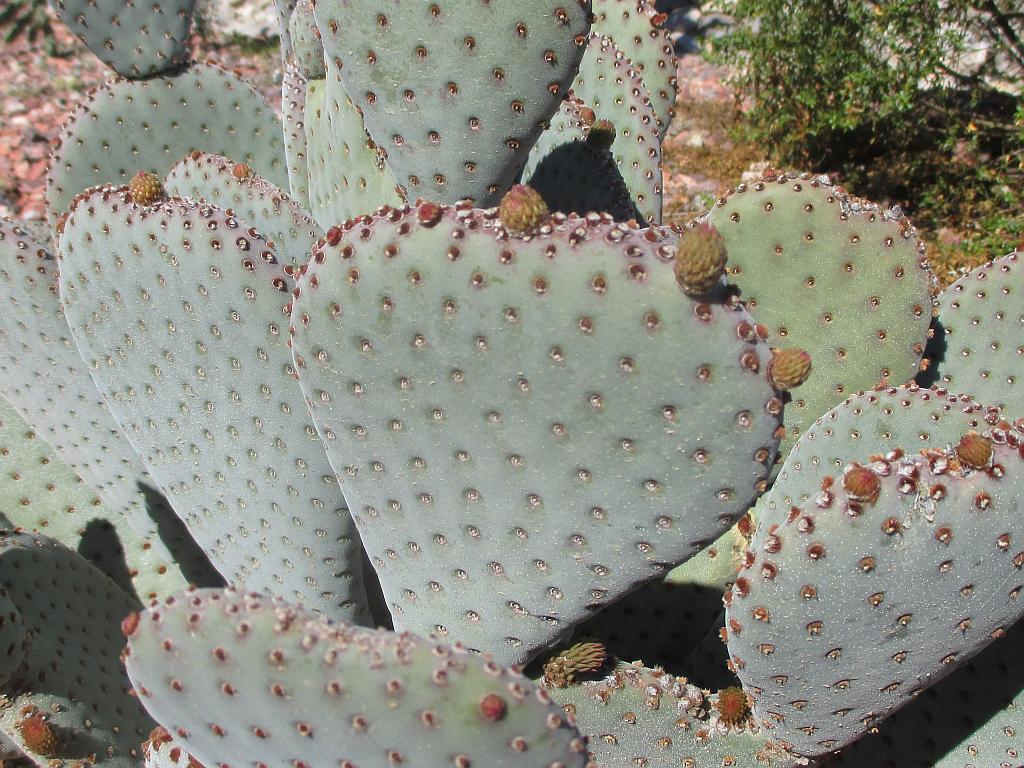
Cactus Flower Buds

We have been home for a couple of days following our recent visit to the California Deserts in the Coachella Valley and the Colorado River. We were fortunate to have had wonderful, warm (for the season) weather the whole time we were gone. Better yet, the weather here at home is just as beautiful and warm.

We did a little yard work today; since the weeds are vigorously growing, it was time to spray weed killer wherever we see them growing out of the rocks or near the trees in the orchard and in the courtyard. We noticed several indications that spring is coming soon – the plum tree in the courtyard has a lot of new flowers and growth, plus the beavertail cactus in the photo above is showing several flower buds. It won’t be long until the vivid pink flowers on this cactus are catching our attention (and the attention of the pollinators as well).

Unfortunately for the cactus shown in the photo above, it is one of the rapid growing species that we have decided to move out of the front part of the yard and into the rock and cactus garden on the west side of the lot. We will let it do it’s spring thing and then it will either be moved to the R&C garden or some of the paddles will be transplanted to that part of the yard. There are some bare spots on the hill near the fence line to the west where these will suffice as barrier cactus to divert the javelina to the back wash rather than into our improved areas.

Click on the image to enlarge.

First Plum Flower of (Early) Spring

Plum Flower

We were watching the last rays of the setting sun in the courtyard this evening when I noticed that there was a flower open on our flowering plum tree. The open flower surprised me since the tree is completely denuded of leaves after the recent freezing weather (well a few nights, at least).

The mature plum tree is a replacement for the original tree the landscapers planted in 2011. The old tree snapped off at the trunk (it was a smaller tree) during a 2014 microburst that took out a lot of the natural vegetation that summer.

Soon, this tree will be growing it’s new spring leaves, but not before we prune off a few of the very low branches and suckers to encourage the tree to grow vertically and not into the walkway or the courtyard wall. Click on the image to enlarge.

Welcome Signs of Spring

Paperwhites

We have had some relief from the sub-freezing temperatures over the past couple of weeks. The really cold temperatures may be behind us, as attested by flowers opening in the desert.

In recent days, my Paperwhites (Narcissus papyraceus) have begun to bloom in the courtyard. We have had these perennial flowers come up every January since we planted the bulbs shortly after moving here, about five years ago.

Any resemblance to daffodils is not a coincidence according to Wikipedia:

Narcissus papyraceus (from papyrus and aceus; meaning paper-like), one of a few species known as paperwhite, is a perennial bulbous plant native to the western Mediterranean region, from Greece to Portugal plus Morocco and Algeria. The species is considered naturalized in the Azores, Corsica, Texas, California and Louisiana. The white flowers are borne in bunches and are strongly fragrant. It is frequently grown as a house plant, often forced to flower at Christmas.

Paperwhites are part of the Narcissus genus which includes plants known as daffodils.

In addition to the places listed above where these are considered “naturalized,” I submit Arizona should be added to the list. Click on the image to enlarge.