In recognition of the Memorial Day Holiday, the folks at our local Lowe’s arranged these petunias in their garden department to resemble Old Glory. I thought it looked pretty and was a nice patriotic gesture.
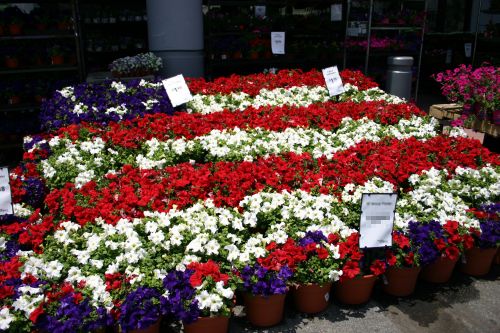

In recognition of the Memorial Day Holiday, the folks at our local Lowe’s arranged these petunias in their garden department to resemble Old Glory. I thought it looked pretty and was a nice patriotic gesture.
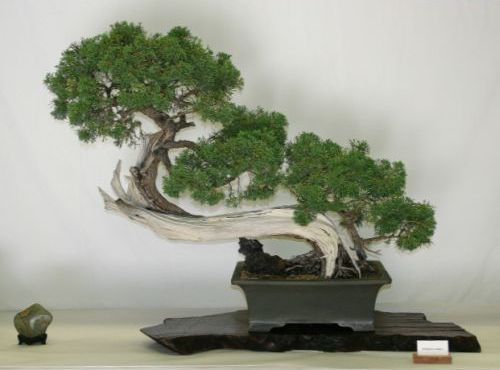
One of our stops today was to briefly visit the Bonsai Show sponsored by the South Coast Bonsai Association at the South Coast Botanic Garden. This is a picture of a Shimpaku Juniper, one of many beautiful exhibits on display.
I snapped this picture last weekend at the garden shop at our local home improvement outlet.
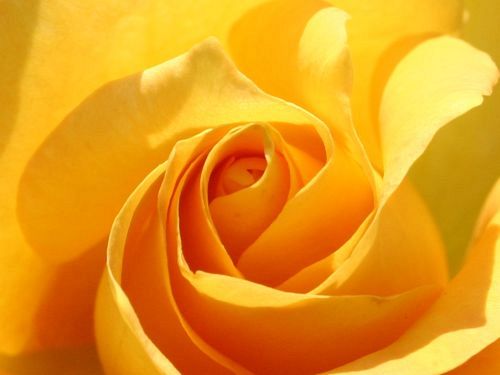
Credit to ProFlowers for the meanings of yellow roses:
Yellow roses have a shorter, albeit no less fascinating, history than other roses. It wasn’t until around the 18th century that yellow roses were discovered growing naturally in parts of the Middle East. Prior to this, roses in cultivation predominantly existed in various shades of pink and to a lesser extent, white. However, once the first yellow roses were introduced, their popularity quickly spread.
A bouquet of yellow roses now brings to mind all of the sunny, cheerful feelings of warmth and happiness. In contrast to the romantic meanings attributed to other roses, the yellow rose is purely a symbol for friendship. This gives it a unique place in the pantheon of roses. Yellow roses can send the perfect message of appreciation and platonic love without the romantic subtext of other colors. They can represent feelings of joy and delight, and are an ideal way to brighten someone’s day who may be feeling down. There is perhaps no other flower that is able to bring out a smile in quite the way that a yellow rose can.
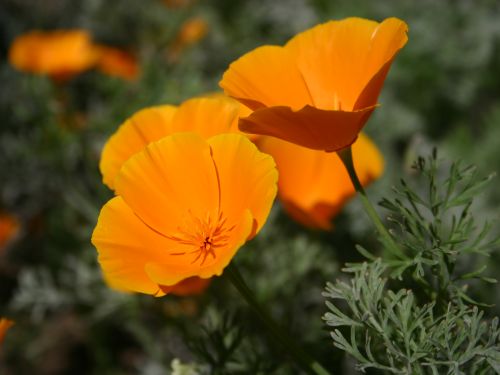
As summer approaches, our poppies continue to flourish. I just love the wonderful color of the California Poppy.
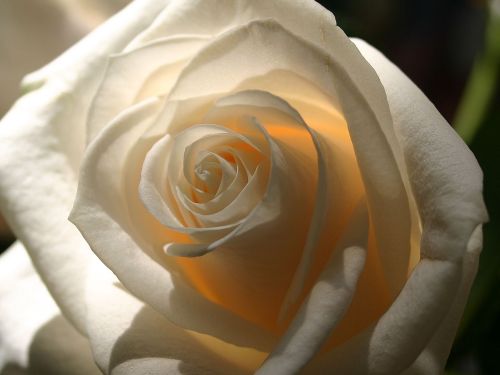
This is a picture of one of the Vendela Roses in my crystal bud vase this week. The flower was partially lighted from behind with sunlight through the window above, giving it this nice glowing effect.
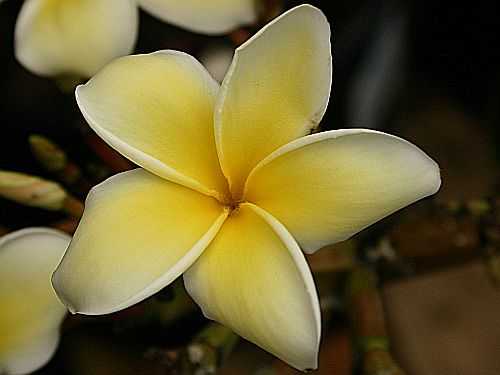
This Plumeria, seen in the garden shop today, is supposed to be very fragrant, but I didn’t get much fragrance when I leaned over to smell it. I looked it up on WikiPedia and found this out about the Plumeria:
Plumeria flowers are most fragrant at night in order to lure sphinx moths to pollinate them. The flowers have no nectar, and simply dupe their pollinators. The moths inadvertently pollinate them by transferring pollen from flower to flower in their fruitless search for nectar.
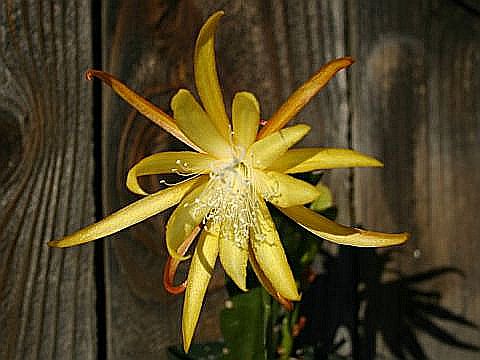
When we went to the Cactus and Succulent Exhibition last month, we picked up a 3-inch cutting from an epiphyllum in a small plastic planter. We put it in the patio and this week it produced this beautiful ‘frühlingsgold’ flower. Frühlingsgold translates from German to ‘spring gold’ in English.