Home & Garden

Spring Stargazer Lilies

star gazerThis week the floral concession in our supermarket had some of the best Stargazer Lilies seen this year. I saw them – and they became mine.

From ProFlowers – the meaning of Stargazer Lilies:

The stargazer has added a new layer to the already rich legacy of lilies, which have been a significant floral symbol for centuries. In ancient mythology and in folklore from around the world, the lily has appeared as a deeply spiritual and philosophical metaphor. Developed in the latter part of the 20th century, the stargazer lily is a recent addition to the lily family, but this unique and rather exotic hybrid has rapidly risen in popularity to become one of the most adored and sought-after of all lily varieties.

Please click on the inset image for a gorgeous close-up of a magnificent Stargazer.

Columbine Flower

We went to the home improvement center today to get some things we needed around the house. As usual, I went into the garden shop and snapped some pictures of the flowers. This Columbine was among the 90 or so pictures I took. Click image for larger view.

columbine.jpg

From Wikipedia:

Aquilegia (columbine) is a genus of about 60-70 species of herbaceous perennial plants that are found in meadows, woodlands, and at higher altitudes throughout the Northern Hemisphere. They are known for their distinctive flowers, generally bell-shaped, with each petal modified into an elongated nectar spur.

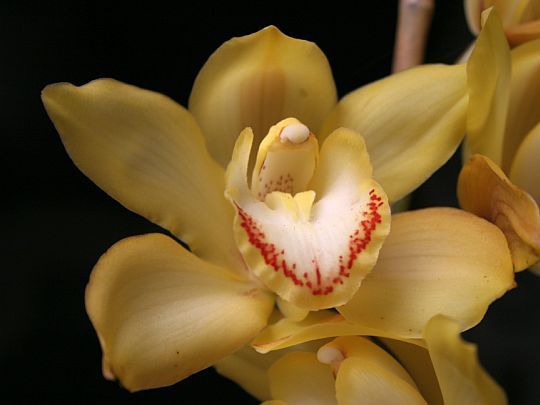
The Bargain Cymbidium

We got this one from the Botanic Garden Gift shop several weeks ago. At that time, we only paid about 25% of the asking price normally seen in the garden center hot house. It’s been really beautiful the whole time, but like all orchids, will soon fade away.

yellow-cymb.jpg

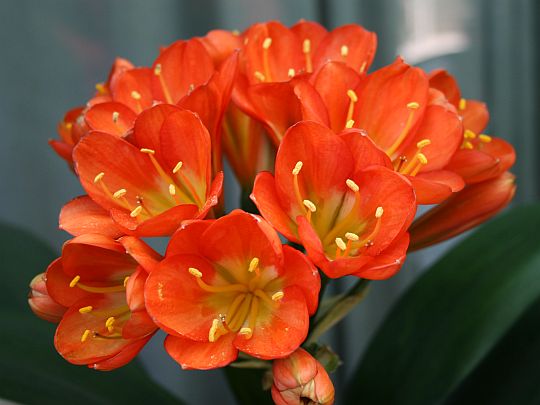
Kaffir Lilies

It’s that time of the year when these brilliant Kaffir Lilies are seen all over the area. We’re no exception, since we got this one last year at the local shrubbery emporium.

Kaffir Lilies

Tuscan Blue Rosemary

beeThe popular herb Rosemary is also commonly used as a decorative shrub and as topiary. It is native to the Mediterranean but also does well in Southern California. The Rosemary name has nothing to do with Rose or Mary – it comes from the Latin name for the shrub which literally means ‘dew of the sea.’ Rosemary has a reputation as a remedy for various ailments and is said to improve memory.

We have several bushes in the back yard which give us a year-round supply of the herb for the kitchen and other culinary uses – we use the thicker woody stems as skewers for shish-kebabs. Sometimes we will throw some Rosemary stems in the barbecue to add flavor to grilled chicken, pork or beef.

If you look closely at the little blue flowers, you will see a very pretty pattern that resembles an iris or similar flower. Of course, the bees are attracted to the flowers too as seen in the image above.

Click on the image below for a very big picture.

blue tuscan

Camera: Canon EOS 400D Rebel XTi, EF-S 18-55mm, f3.5-5.6 zoom lens.

A Red and White Tulip

red-white-tulip.jpgEarly spring bulbs bring color and beauty to the garden. This tulip, freshly spritzed, is no exception. Click on the image for larger.

From Wikipedia:

Tulips originate from mountainous areas with temperate climates and need a period of cool dormancy. They do best in climates with long cool springs and early summers, but they are often grown as spring blooming annual plantings in warmer areas of the world. The bulbs are typically planted in late summer and fall, normally from 10 to 20 cm (4 to 8 in.) deep, depending of the type planted, in well draining soils. In parts of the world that do not have long cool springs and early summers, the bulbs are often planted up to 12 inches deep, this provides some protection from the heat of summer and tends to force the plants to regenerate one large bulb each year instead of many smaller non blooming ones. This can extend the usefulness of the plants in warmer areas a few years but not stave off the degradation in bulb size and eventual death of the plants.