Damsel

Avalon Bay – Then and Now

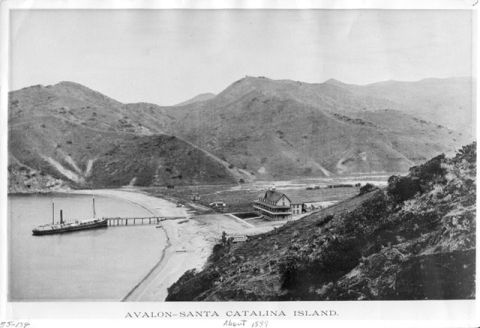
What a difference 117 years made to this serene little cove on Santa Catalina Island. This is a shot taken circa 1889 from a hill west of the bay looking toward the old Hotel Metropole. Photo credit COLA Public Library Website

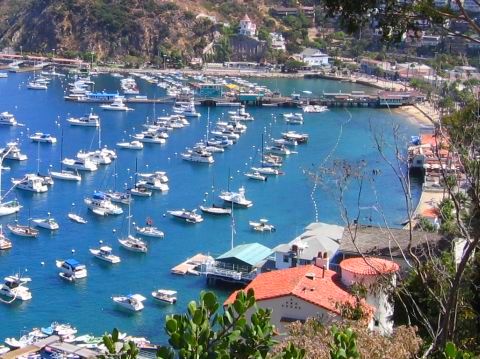
And this is a shot of the bay we took last September from about the same place:

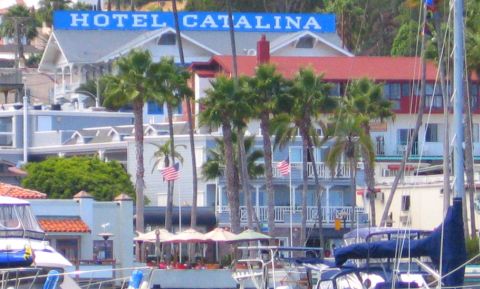
This next shot was taken from the bay looking toward the location of the old Hotel Metropole seen in the top picture (the old Metropole burned down years ago). The new Hotel Metropole hotel is located amongst the clutter just behind the tall palm trees in the center of the photo.

A Yellow Icelandic Poppy

I found out an interesting fact: Icelandic Poppies are native to the U.S.A. So why do they call it an Icelandic Poppy? Maybe it’s because it tolerates the colder weather so well. Although this has not been a particularly cold winter here in California, these thrive nonetheless in our garden. I snapped this shot today under cloudy skies to show the subtle beauty of this bloom in subdued light.

For more information on “Papaver nudicaule” see this page at Dave’s Garden:

PlantFiles: Detailed information on Iceland poppy, Arctic Poppy (Papaver nudicaule)

Family: Papaveraceae (puh-pav-er-AY-see-ee) (Info)
Genus: Papaver (puh-PAY-ver) (Info)
Species: nudicaule (new-dee-KAW-lee) (Info)

[more]

Damsel’s Danish Style Stuffed Potatoes

Today’s special meal included this great recipe for stuffed potatoes (twice baked). What was really cool is that we substituted Danish Havarti cheese for the French Gruyere originally called out. We’re supporting Denmark in the wake of the insane Islamic reaction to the Danish Muhammad cartoons. And, we’ve been avoiding French stuff ever since their attitude about operation Iraqi Freedom turned out to be connected to oil-for-food scams. And there was no sacrifice to the end product since the Havarti was excellent!!

Damsel’s Danish Style Stuffed Potatoes

Ingredients:

4 medium to large baking potatoes, like russets, washed

Filling:
1 shallot, chopped
3 cloves garlic, chopped
4 strips bacon chopped into small pieces
4 oz. Danish Havarti cheese, shredded, about 1 cup
1/2 cup evaporated milk
6 sprigs fresh thyme, leaves only, chopped to about 2 tablespoons
Salt and pepper

Preparation:

Preheat oven to 400 degrees. Pierce potato skins with the tines of a fork. Wrap individually in aluminum foil. Bake for 1 1/2 hours.

About 20 minutes before the potatoes are done, heat a skillet and add the bacon pieces. Cook the bacon until crisp. Remove from the skillet with a slotted spoon and drain on paper towels.
Add chopped shallots and garlic and saute in bacon renderings for 2 to 3 minutes or until bits are just tender. Set aside.

When done, cool potatoes for 5 minutes and remove foil. Slice the potatoes 1/2 inch from a side. Scrape the potato flesh from the removed side into a mixing bowl. Discard the side skin. Being careful to keep at least 1/4 to 1/2 inch from the skins, remove most of the remaining potato flesh and place into the mixing bowl. Set hollowed out potatoes aside on a non-stick baking sheet or in a lightly oiled baking pan.

To the cooked potato in the mixing bowl, add shallots and garlic, bacon, grated cheese, evaporated milk, thyme, and season with salt and pepper. Mash mixture with a potato masher or dinner fork until mixture is combined, but not entirely lump-free.

Scoop mixture in even amounts into hollowed potatoes and bake for 15 to 20 more minutes, or until lightly browned.

Serving suggestion – Stuffed potatoes, grilled bone-in rib eye steaks with fresh blanched asparagus.

Phalaenopsis

Known as the “moth orchid” due to its resemblance to some tropical moths, the phalaenopsis is native to the Asiatic tropics, India, Indonesia and the Philippines. This lovely and delicate plant is now a welcome adornment to our kitchen counter under the skylight.

I Want My Country Back!

Every once in a while, I read something in the blogosphere that is worth giving special mention here, even though it’s on other blogs. Today, while surfing around the ‘sphere I ran across an interesting and inspiring piece from Rick Roberts, a conservative radio personality. You can read it in it’s entirety on Rick’s blog on the KFMB website at I Want My Country Back.

This is an excerpt from Rick’s article:

“I WANT MY COUNTRY BACK!”- By Rick Roberts

And I want America to be America. All of those opportunities, all of those things that made her great, I want those returned to the forefront. If you want to come to this country we welcome you with open arms. We simply ask that you abide by our laws. I don’t want you to snub your nose at our laws, then take advantage of our opportunities, and then cling to the constitution most of which you can’t even read because you don’t speak the language.
Picture credit: KFMB/Rick Roberts

[read it all]

Via Big Dog’s Weblog

Celebrating Carnival

Carnival (a farewell to meat) is defined as a communal celebration, especially the religious celebration in Catholic countries that takes place just before Lent. Since early times carnivals have been accompanied by parades, masquerades, pageants, and other forms of revelry that had their origins in pre-Christian pagan rites, particularly fertility rites that were connected with the coming of spring and the rebirth of vegetation.

One of the first recorded instances of an annual spring festival is the festival of Osiris in Egypt; it commemorated the renewal of life brought about by the yearly flooding of the Nile. In Athens, during the 6th century B.C., a yearly celebration in honor of the god Dionysus was the first recorded instance of the use of a float. It was during the Roman Empire that carnivals reached an unparalleled peak of civil disorder and licentiousness. The major Roman carnivals were the Bacchanalia, the Saturnalia, and the Lupercalia.

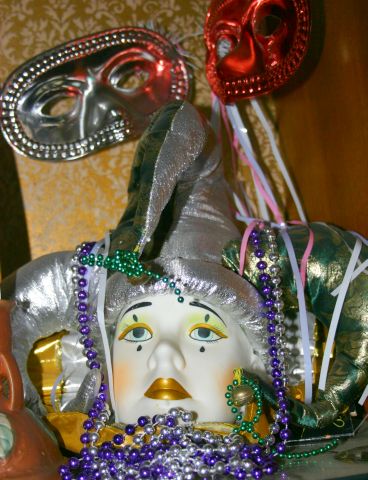
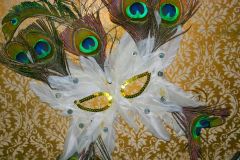
Image: a peacock-feathered Carnival mask – credit: Damsel

In Europe the tradition of spring fertility celebrations persisted well into Christian times, where carnivals reached their peak during the 14th and 15th cent. Because carnivals are deeply rooted in pagan superstitions and the folklore of Europe, the Roman Catholic Church was unable to stamp them out and finally accepted many of them as part of church activity. The immediate consequence of church influence may be seen in the medieval Feast of Fools, which included a mock Mass and a blasphemous impersonation of church officials. Eventually, however, the power of the church made itself felt, and the carnival was stripped of its most offending elements. The church succeeded in dominating the activities of the carnivals, and eventually they became directly related to the coming of Lent. The major celebrations are generally on Shrove Tuesday or “Fat” Tuesday (Mardi Gras).