Gerbera was considered a powerful aphrodisiac during the early 1920s. Popular legend held it would arouse sentiments when boiled and mixed with regular food. We just like them to add color to our garden.


Gerbera was considered a powerful aphrodisiac during the early 1920s. Popular legend held it would arouse sentiments when boiled and mixed with regular food. We just like them to add color to our garden.
Cymbidiums became popular in Europe during the Victorian era. One feature that makes the plant so popular is the fact that it can survive during cold temperatures (as low as 7°C or 45°F). Orchid hobbyists in temperate climates appreciate the fact that they can bloom in winter, when few other orchids are blooming.
Only a few Cymbidium species are commonly grown in nurseries, due to the popularity of hybrids. Most are to be found in botanical gardens or in their ever shrinking natural habitat.
These were in the hot house orchid section at the garden shop last weekend.

When the sunlight hits them, these ice plant blossoms open their vibrant petals for all to see. The ice plant is commonly used as ground cover and to stabilize slopes. Originating in South Africa, large cells in the leaves of these plants sparkle like granules of ice in the sun, hence its common name. I photographed this flower blooming in the garden shop over the weekend.

Azaleas, the aristocrats of indoor bloomers, provide a mass of flowers that can be white, red, orange, pink, purple, salmon, freckled, variegated, bicolored or white with colored edges.
These are the white freckled variety seen today at the garden shop.

 After seeing pictures and interviews after Al Gore received his academy award, I couldn’t help but notice that the champion of the Greenbats has gained considerable weight. As a proponent of the health of the globe, Mr. Gore should realize the risks of being overweight, especially as a senior citizen. Perhaps he can buy some CALORIE OFFSETS that will work as effectively as purchasing carbon offsets.
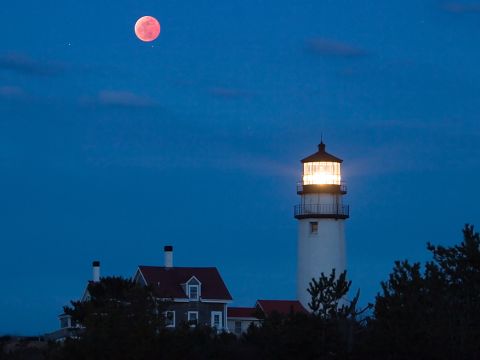
Today’s Astronomy Picture of the Day features this beautiful photograph of the Highland Lighthouse under a total lunar eclipse. Credit & Copyright: Chris Cook Photography and APOD.
Update: These are probably Sugarbird Daffodils and not Saint Louie Louie Daffodils as I originally thought. Thanks to Minstrel for pointing it out (a case of mistaken daffodil identity).
Last spring we had several flowers from the Saint Louie Louie Sugarbird Daffodil plants. This year, we’re getting at least two, as you can see.
