Archive for March, 2010

Frosty Pink

frosty-pink.jpgWhen I acquired this succulent, I did not keep the label that tells me the name of this species. Today, I spotted one in the garden shop, picked it up and photographed the label on the plastic flowerpot. It identified this as “Frosty Pink,” a type of Kalanchoe, pumila to be exact.

Drought tolerant when established. Kalanchoe pumila has cascading stems making it excellent for hanging baskets. Masses of lavender pink flowers from January to April. Requires well-drained soil and temperatures above 36°F.

Click on the image above to enlarge.

Comments off

Ramirez On Our Broken Foreign Policy

Ramirez leaves out Castro and Hugo Chavez, but you get the picture . . .

ramirez-international.jpg

Comments off

Growing Artichokes

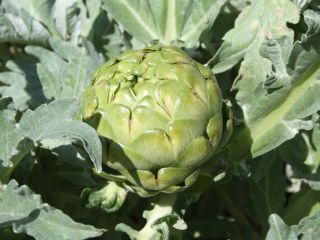
artichoke.jpgFor the first time, our artichoke has sprouted a flower pod. We’ve decided not to harvest the edible pod but to let it bloom into the gorgeous flower that artichokes bear. I just watered this plant on Saturday and did not notice the flower pod that seems to have sprung up overnight until Sunday.

I transplanted this from the plastic flowerpot where I tried growing this last year. It has been in its new spot since last fall. I’m hoping that it sprouts another pod because I would like to harvest one of these. Artichokes are usually 3 to 5 dollars (sometimes more) in the produce section of the supermarket.

Click on the image to enlarge.

I found this about the artichoke at Wikipedia:

The Globe Artichoke (Cynara cardunculus) is a perennial thistle originating in southern Europe around the Mediterranean. It grows to 4 to six feet tall, with arching, deeply lobed, silvery glaucous-green leaves 20 to 30 inches long. The flowers develop in a large head from an edible bud about 3 to 6 inches in diameter with numerous triangular scales; the individual florets are purple. The edible portion of the buds consists primarily of the fleshy lower portions of the involucral bracts and the base, known as the “heart”; the mass of immature florets in the center of the bud is called the “choke”.

Comments off

Judge Andrew Napolitano on Healthcare

This is an important 7½ minute message from Judge Andrew Napolitano . . .

“Medicare - broke. Social Security - broke. Medicaid - broke. Amtrak - broke. The U.S.Post Office - broke. Who in their right mind would give healthcare, with that track record, to the same people who have broken everything they’ve tried to manage?”

View the entire video.

Cross-posted at The Wandering Minstrel

Comments off

Neoporteria Senilis Flowers

The bright pink flowers of this small round cactus are about ¾ inches in diameter. I bought this cactus at the cactus and succulent show and sale held at the botanic gardens. It started blooming as we were out in the desert taking pictures of the flowers there. I’m glad that these were still so pretty when we got home. Click on the image to enlarge.

neoporteria-senilis.jpg

More information from Desert Tropicals:

Origin: Chile (Rio Choapa)

Growth Habits: Solitary, globose to short columnar, 7.2 inches tall (18 cm), 3.2 inches in diameter (8 cm); 13 to 21 ribs, obscured by the spines; blond to white, curly spines with darker tips; 4 to 20 centrals; 15 to 40 radials.

Watering Needs: Extremely root prone, needs good drainage.

Comments off

Bladderpod Wildflower

Found in sandy washes, open flats and roadsides in Joshua Tree National Park and other desert regions in California. I spotted this one growing in the Colorado Desert region of the park. Click image for big.

bladderpod.jpg

Comments (2)

The Proud and Profane

What are we gonna do about ol’ Joe?

bfd.jpg

Comments off

Joshua Trees in Bloom

joshua-bloom.jpgThe reason we picked late March for our visit to the Joshua Tree National Park is because last time we were here, we asked a ranger the best time to see the Joshua trees in bloom. It seems to vary, but it’s a good bet that blooms will appear from late March to early April.

We saw a lot of them today on our way up to Keys View, a dramatic panoramic vista of the Coachella Valley and the Palm Springs area. From that vantage point, we could see the Salton Sea, Banning Pass and the San Andreas earthquake fault line.

The Joshua Trees seemed to thrive at around the 4300 foot level in the park. Many were in bloom. I took this image near some interesting rock formations which are plentiful in this area which is a domain of the Western Bighorn Sheep. Click on the image for a big view of the tree, the rocks and the inset enlargement of the bloom.

Comments off

Desert Senna Flowers

Wooo Saaah - time out from the anger and frustration over health care to stop and look at the flowers. This is a picture of the flowers on the desert senna. I took this photo near the visitors center at Joshua Tree National Park today. Click on the image for a closer look.

senna.jpg

Digital Desert has this information on the shrub that grows these flowers.

Seeds of many desert plants do not sprout easily. Some need to be passed through the digestive tracts of animals before they grow. Some, like the Desert Senna, need to be soaked by a heavy rainfall and the scoured clean of its coated resin by the rocks in a wash.

If conditions are right, golden flowers will bloom in April and May but the plant will be leafless most of the year. The Desert Senna relies on green chlorophyll in its stems to manufacture food.

Comments off

Defeat These Bastards

Seriously, people, we need to disconnect the communist idiots in congress, the white house and in judicial positions before we’re all totally screwed. Time is running out.

Comments off

« Previous entries